
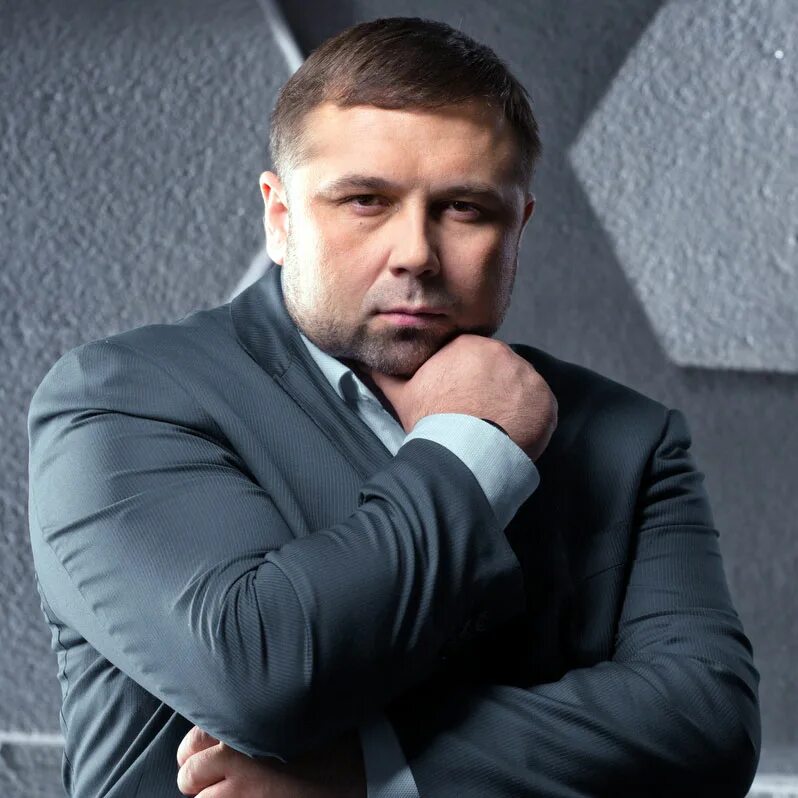
Birth, family and early interests
Tokhir Tukhtarov was born on 9 June 1979 in Tashkent, on Lisunov Street in the Khamza district.
He grew up in a family of ordinary working people. His mother, Elmira Ravilyevna, was a seamstress, and his father, Rafail Abdulayevich, was a plumber. His father had previously been an athlete.
His father received an apartment through his work as a plumber, and the family moved to a new building in a new district, on 40 Years of Victory Street.
There he entered the second grade at experimental School No. 255, which specialized in mathematics and programming. Programming was taught from the second grade to children with good mathematics grades. One day, a teacher asked him to stay after class and told him he would be moved to another class. Pupils from different classes were being brought together to train as future programmers.
In 1987, he began studying programming at school. The pupils learned BASIC, Fortran, Pascal and Algorithm.
At the same age, he became interested in amateur radio and electronics, building circuits and repairing equipment, including third-generation semiconductor televisions.
Electronics was his hobby at home. He assembled and repaired equipment at home, studied programming at school and attended sports clubs after school: first freestyle wrestling and judo, then karate.
Moving to the Orenburg region
In 1992, after the collapse of the Soviet Union, the Tashkent chapter of his life ended. The family moved from Tashkent to Stepanovka, a village in the Perevolotsky district of the Orenburg region.
Programming classes were no longer available there. He became interested in astronomy, biology and machinery, including wheeled and tracked tractors.
The pupils studied machinery in school lessons: agricultural machinery classes introduced them to tractor construction and taught them how to carry out repairs.
After finishing school, he moved to the neighboring village of Kubanka.
At the same time, he learned the trades of electrician, plumber, builder and carpenter.
Village life also taught him to grow crops and care for livestock. He had to master a range of tasks and understand how agriculture worked. He lived in Kubanka until 2000.
There he obtained a computer and began refreshing and improving his programming skills.
The start of his entrepreneurial career
In 2000, he moved to Kazan. He married there.
After marrying, he took his first job in an antenna workshop, working with cable television.
He opened his first computer company in Kazan, repairing, buying and selling computers, laptops, monitors and other computer equipment.
He then opened Web Studio Kazan. In 2001–2002, he and his team developed a social portal with social networking features. It was an early form of social network. Their project appeared before Facebook.
After launch, the founders realized they had overestimated internet access among their audience. Internet service was expensive and not yet an everyday tool for potential users. In 2002, even their companies paid 40,000 rubles a month for a connection of just 256 kilobits per second.
After that, he and his team turned to a project to register a top-level domain.
During that period, he and his team regularly negotiated with ICANN and called its representatives in the United States. At their request, the organization translated documents into Russian.
He and his team prepared a business plan and drew on a wide network of contacts to seek funding. However, they could not raise the million needed to register the top-level domain.
He and his team then worked on other IT projects, including a school planner and electronic register. They sold successful projects and retained unsuccessful ones.
One project was the ride-sharing service Podvezyosh. A user posted a route and others agreed to travel together. A group of five would share one vehicle. Such a trip cost less than traveling by bus.
Eventually, their company broke up. He then moved into mobile communications, including work at MegaFon and Beeline. He worked on mobile telephony, cell towers and mobile internet access, devoting a considerable period to this field.
He then worked with the United Russia party as a member of its expert council on developing Runet in the Russian Federation.
He held this position for a little over a year. During that period, he proposed registering the TAT domain for Tatarstan, but the proposal was rejected. He made no further top-level domain proposals after that.
He then returned to the private commercial sector and developed various IT projects that generated advertising revenue.
The Android phone project in 2007
A distinct episode in his work dates to 2007. An early developer preview of Android appeared in November 2007. It was this release, which he recalls as an alpha version, that informed his phone development. He liked the idea and became interested in building an Android-based phone. He saw the platform as a way to develop a product that could compete with Apple's iPhone and proposed it to potential partners. His account states that Steve Jobs supported his idea and saw promise in it. A friend working at city hall helped arrange a conversation with two representatives of a major business.
The meeting took place in central Kazan. He presented phone drawings, its appearance, design and specifications. He describes the visitors from China as the owner of T-Mobile and its director. According to his account, the company had a Chinese factory employing 100,000 people per shift. They liked the idea. The phone's specifications were roughly comparable to the iPhone, perhaps with a slightly larger body and more memory, but at a substantially different price.
They gave him a month to convince them to proceed. They left the next day, and communication continued by email. He did not manage to meet them again. Ultimately, they declined to manufacture the Android phone. He hoped to revisit and realize the idea independently, but had to close the project at the time.
After that, he returned to developing various information technology platforms.
IT platforms and Crimea in 2016
In 2016, he went to Crimea. By then, he had created many platforms that he hoped to launch worldwide, but lacked the necessary funding.
Local television in Crimea took an interest in him and produced a report. It helped him find investors. He returned to Kazan and focused on website development. His platforms were operational but could not handle large volumes of traffic, limiting growth. By then, he had assembled an audience of around 22 million users.
Tokhir brought together an initiative team of around ten people, and they began working on various IT projects. They established a company to develop a unified platform: a social network for Muslims. This was the idea that united them. They described their creation as the first worldwide social network for Muslims.
The founders announced that the social network would operate worldwide. However, they could not achieve that scale because they lacked investment in the data centers needed to serve a global online audience.
Their Kazan business operated as SUHBA LLC. Tokhir Tukhtarov attributes its bankruptcy to a lawsuit by AFK Group. He says the company carried out an intangible asset valuation that he considers incorrect and noncompliant with legal requirements, then sued for payment. SUHBA LLC in Kazan and SUHBA JSC in Moscow were separate, independent organizations.
To establish SUHBA JSC, he traveled to Moscow to meet a billionaire businessman and seek investment. He spent almost a year at the businessman's office waiting for an appointment. He held no job there, not even as a secretary; he was simply waiting for a chance to meet and obtain support for his project.
After about a year, Tokhir secured the meeting. The investor provided the initial funding that enabled him to establish SUHBA JSC. They then began working intensively.
Developing the SUHBA brand
He began traveling to neighboring countries and selling SUHBA JSC registration packages. The funds were needed to build a data center, buy equipment and pay staff. The company grew quickly and became highly popular in Russia. Its representatives appeared in the media, on television channels and in various programs.
Their idea was to create a new brand that would itself generate revenue. He and his team planned to list on an exchange, issue and sell shares, then use the funds to launch numerous IT services. These would operate in parallel, handle small orders and generate income across several areas.
The founders wanted the services to reach both Muslims and non-Muslims. The social network's concept rejected extremism, profanity, alcohol and violence. Moderators blocked prohibited material and prevented such content from appearing on its pages.
Over time, they therefore began positioning the product as interfaith, intended for people of different religions.
He and his partners began opening subsidiaries in various fields, including real estate, film production and consulting.
He traveled abroad extensively to learn from others, open branches and broaden his outlook. There were many trips and events. Once, Google Maps showed that he had visited more than a hundred cities in different countries in a single year.
Work in Turkey and new connections
He devoted considerable time to Turkey. He and his partners opened three companies there, met businesspeople and met the Turkish president at an event. They gained recognition and worked to integrate their company into the local business community.
During that period, he met many well-known people, including Mike Tyson, Sami Naceri, Don “The Dragon” Wilson and Nick Vujicic. Mark Dacascos also became a friend. He met him at Kadyrov's birthday celebration, to which he received an official invitation. He still keeps the invitation document.
For that occasion, he bought a gift with his own money: a saddle made by more than twenty craftspeople from Kyzyl. They used silver, leather and bronze. Its design resembled an eagle.
Tokhir Tukhtarov also took part in trips and meetings with Sami Naceri.
Titles and distinctions
- International UN consultant No. 890621 — status stated in the X-WORLD profile ↗.
- International expert on protecting children from online violence, CIPDH, Paris, France.
- Member of the International Academy of National Security of United Europe.
- Consultant to the International Independent Tribunal, registration No. 137.
Green Internet finalist diploma
A finalist diploma for the Innovative Project for Developing a Safe Internet, Green Internet, is included in Tokhir Tukhtarov's awards list. X-WORLD awards list ↗
Public and international awards
In 2017–2019, SUHBA's establishment and growth involved numerous trips and public and international awards. Active development continued almost until 2020.
Russian public awards
Tokhir Tukhtarov's corporate awards list includes the Order for Professionalism and Business Reputation, First Class, a Flawless Reputation public award diploma and Business Leader — 2018 Award Laureate. X-WORLD list of awards ↗
Tokhir Rafailyevich Tukhtarov is also included in the Council for Public Awards' published list of recipients at the Professionals of Russia ceremony on 7 December 2017. Council for Public Awards publication ↗
CIS Business Leader
Tokhir Rafailyevich Tukhtarov, president of SUHBA JSC, is listed as a CIS Business Leader award recipient on the CIS Business Center for Economic Development website. List of recipients ↗
The award announcement gives the date as 15 March 2019 and the category as Contribution to the Development of Economic Integration of CIS Member States. Award announcement ↗
Asian Arab Chamber of Commerce award
Tukhtarov's international awards include the Asian Arab Chamber Business Awards. X-Phone describes it as an Asian Arab Chamber of Commerce award for contributions to economic integration. Award in the X-Phone profile ↗
The award presentation is associated with a trip to Hyderabad, India. The organizer publishes information about the Asian Arab Awards 2019 ceremony at the Taj Krishna hotel in Hyderabad. Organizer's ceremony page ↗
International award in Malta
In 2018–2019, Tokhir Tukhtarov received an international gold medal award in Malta.
Golden Peacemaker Order
Tokhir Tukhtarov received the Golden Peacemaker Order for contributions to peace. An IA REX interview dated 22 October 2017 describes the award presentation at a forum in Yalta. Interview about the award ↗ · Corporate awards list ↗
Moscow: establishing SUHBA JSC
They could not attract the necessary investment in Kazan, where opportunities to find investors were limited. In 2016, Tokhir Tukhtarov moved to Moscow to establish SUHBA JSC and continue his work there. He settled in the capital and registered his residence. As Tokhir says, “Now I can call myself a Muscovite with a smile.”
Evening Urgant, Comedy Club, KVN, the Zapashny brothers and a trip to Kazan with Sami Naceri
The Moscow part of Tokhir Tukhtarov and Sami Naceri's trip began with a visit to Evening Urgant.
The trip to Evening Urgant, as recalled by Tokhir Tukhtarov: “Sami and I were running late for the television studio. It was rush hour in Moscow, and time was short. I was driving in a hurry, reaching roughly 140 kilometers per hour. But what I remember most is Sami's face. He gripped the handle with both hands and kept repeating, frightened, ‘Crazy driver! Stop! Slowly!’ He wanted me to stop and slow down. I reminded him of Taxi: how could he handle such dizzying chases on screen and be frightened here? Sami replied that films were films, and he did not drive like that in real life. Later, he told the story on Evening Urgant: a friend had driven him to the show and genuinely frightened him with his speed. Urgant picked up the joke, and the studio laughed. Our rush became a story about how difficult it can be to be a passenger, even when the world knows you as a fearless taxi driver.”
Tokhir Tukhtarov and Sami Naceri then visited the Zapashny brothers. They not only watched the animals but entered a cage alone with lions. Later, they fed a hippopotamus; Tokhir described his arm going into its mouth up to the elbow. After the visit, they helped prepare Sami Naceri's KVN appearance. The Moscow program also included Comedy Club, with filming and interviews at various venues.
The KVN appearance, as recalled by Tokhir Tukhtarov: “We were not merely spectators at KVN. The Moscow circus team associated with the Zapashny brothers asked me to help arrange Sami Naceri's participation in a sketch. We needed a day in his filming schedule. The entrance was unexpected: the famous ‘taxi driver’ came onstage as a coachman, on a horse-drawn cart. At first, a fur coat concealed him. When Sami jumped off and removed it, the audience recognized him and gave him a standing ovation. A famous footballer took part, and he and Sami exchanged shirts onstage. Sami's shirt featured Zinedine Zidane. Sami then said a few words in Russian, including a greeting, and addressed Alexander Maslyakov. It was one of my most vivid memories of that trip. I believe Sami's participation greatly helped the team's performance.”
Tokhir Tukhtarov and Sami Naceri traveled to Kazan by train: the actors wanted to see Russian life from the carriage window. The winter journey brought new impressions. In Kazan, they spent several days filming, gave interviews and organized a press briefing. They were warmly welcomed at various venues.
They played football on the snow-covered pitch at Kazan Arena. Tokhir was in goal, while Sami Naceri took free kicks. Tokhir saved every shot. Filming and interviews also took place at Kazan Arena.
After Kazan, Tokhir Tukhtarov and Sami Naceri visited artist Nikas Safronov at his home in Moscow. A television interview was recorded during the visit.
The 860th Regiment
Tokhir Tukhtarov and his team began filming The 860th Regiment, a film about Afghanistan. They spent almost a month on set, shooting the opening scenes and preparing a making-of film. They plan to complete the picture. For Tokhir, the project is important as a way to preserve historical memory and pass it on to younger generations.
Travel and the search for investors in 2019–2020
In late 2019, Tokhir Tukhtarov left Moscow for Spain on business. In 2020, he arrived in the United Arab Emirates and continued seeking major investors.
The pandemic and business contraction
The COVID-19 pandemic became a global crisis affecting businesses worldwide. In those force-majeure circumstances, the necessary investment could not be secured, and Tokhir Tukhtarov and his partners had to close more than half their companies and projects.
Dubai and returning to Moscow
Tokhir Tukhtarov lived in Dubai from 2020 until November 2021. In November 2021, he returned to Moscow.
Establishing SBA Invest JSC
After returning, Tokhir Tukhtarov began establishing SBA Invest JSC to continue the work started at SUHBA JSC. He shortened SUHBA to SBA and added Invest to the new name.
Describing the first three months after his return to Moscow, Tokhir Tukhtarov says that registration procedures and the issue of 737,833,000 shares with a nominal value of one kopek each had been completed by January. According to the Bank of Russia register, STATUS JSC registered the issue on 22 December 2021; the company was registered on 28 December 2021; and the report registration or issue-results notification date was 11 January 2022. Tokhir also describes recording an intangible asset on the company's balance sheet. He states that INEX's work valued one share at 1,000 rubles and puts SBA Invest JSC's value at USD 10 billion. According to Tokhir Tukhtarov, the intangible asset and shares were valued by the independent appraisal company INEX ↗. He also says that the Bank of Russia and tax authorities accepted the valuation results.
Restructuring SUHBA JSC: the purpose of SBA Invest JSC
In February 2022, Tokhir Tukhtarov informed SUHBA JSC owners about restructuring and the need to register to receive SBA Invest JSC shares. He describes this transition as restructuring SUHBA JSC into SBA Invest JSC. He says its purpose was to return participants' assets in the form of shares and enable them to earn income by subsequently selling those shares.
Transfer of shares to participants
Tokhir Tukhtarov connects SBA Invest JSC's subsequent development with the failure to transfer shares to participants in the previous project. Presenting his position, he explains that a restriction on registration actions against him in Russia meant the company was initially registered in the name of his associate Ruslan Khadzhiev, who became its founder and director.
According to Tukhtarov, when participants were invited to open personal accounts with the registrar STATUS, the principal company, capital and asset procedures had been completed. He expected the transfer of shares to follow. He alleges that Khadzhiev refused to transfer them, citing his ownership of the company and intention to retain the shares.
Tukhtarov emphasizes that, to his knowledge, Khadzhiev had participated in SUHBA JSC and knew the new project's purpose: to give former participants shares they could later manage. According to Tukhtarov, the plan was not implemented. He estimates that more than a thousand people registered with STATUS and alleges that the shares intended for them were never transferred. Opening personal accounts and receiving shares are treated as separate stages in this account.
Tukhtarov attributes the suspension of his proposed mechanism for restoring participants' interests to this refusal to transfer shares.
X-WORLD: a new stage
The next stage was the establishment of X-WORLD. Tokhir Tukhtarov links it to his intention to continue working with SUHBA participants who did not receive SBA Invest JSC shares.
Tokhir reports establishing limited liability companies named X-WORLD in Turkey and in Bishkek, Kyrgyzstan. Registration of a company in Kazakhstan is still planned.
The next plan envisages converting X-WORLD companies into joint-stock companies and issuing shares. Tokhir Tukhtarov is considering Shanghai, China, as the location for a joint-stock company, citing the convenience of working with the local exchange. Participants in the original SUHBA project who did not receive SBA Invest JSC shares are intended to receive shares in the future X-WORLD JSC with the corresponding rights formally recorded.
In developing X-WORLD, Tokhir Tukhtarov brought together business areas based on know-how and innovation. He describes its portfolio as 26 projects in IT and other industries, at different stages of launch, development, capitalization growth or obtaining necessary operating licenses.
One area is the development of the company's own XW token. In Tukhtarov's concept, X-WORLD's internal projects form its economic foundation. Plans include an ICO and a subsequent listing on international cryptocurrency trading platforms.
A separate area is data-center infrastructure in Almaty, Kazakhstan. Tokhir Tukhtarov reports that a small data center is ready, while construction continues on a larger facility of around 1,600 square meters and roughly 200 racks. Completion is planned by the end of 2026.
Tokhir Tukhtarov views these 26 projects as the foundation of a future X-WORLD joint-stock company and preparations for a Shanghai Stock Exchange listing. His expectations of long-term growth in the company's and its shares' value are linked to developing all these areas.
Planned areas include developing and manufacturing environmentally friendly fertilizers, aircraft, cars, trucks and motorcycles, as well as smartphones, laptops and computers. These are only some of the proposed projects. Tukhtarov links the competitiveness of future products to the know-how and innovative solutions underlying their development.
Conclusion
Tokhir Tukhtarov could have stepped away from business and stopped trying to restore the projects on several occasions. Instead, he chose to take responsibility for seeking further solutions for participants.
Tokhir Tukhtarov attributes SUHBA LLC's bankruptcy in Kazan to a lawsuit by AFK Group. He says the company performed an intangible asset valuation he considers incorrect and noncompliant with legal requirements, then sued for payment.
SUHBA JSC is a separate story. Tukhtarov attributes its bankruptcy to repeated refusals by the Bank of Russia to register a new share issue, which he saw as a way to continue the company's work.
The pandemic then became a major challenge. During the global crisis, more than half the companies and projects had to close. Tukhtarov asks why other pandemic closures are attributed to the global crisis, while his company is treated differently despite operating under the same conditions. He considers this unfair. He could have stopped and pursued bankruptcy more than once, but continued seeking solutions for participants.
The next step was SBA Invest JSC. According to Tukhtarov, however, the planned transition of participants to the new company did not happen: Ruslan Khadzhiev, whom he had entrusted with management, refused to transfer the shares to them and retained them.
In late spring 2022, after SBA Invest JSC was registered, Tukhtarov recalls becoming ill with COVID-19. The illness became another severe ordeal.
Tukhtarov recalls lung involvement of 96–97 percent. He spent almost a month in intensive care and experienced two clinical deaths. His condition continued worsening for a long time. Noticeable improvement came around day 23 or 24. He was then transferred to an intensive treatment ward for another seven days.
Even in intensive care, Tukhtarov tried to return to work. He recalls asking for a laptop in the second week, after two clinical deaths. After two days of trying, he realized he lacked the strength: his hands would not respond properly and his vision was failing. The laptop remained under his bed.
He recalls receiving large quantities of hormonal medication during treatment. To convey its intensity, Tukhtarov figuratively compares the amount to supplies for tens of thousands of people under ordinary circumstances.
At one point, he felt he would not recover in hospital and decided to continue recovering at home. He says the doctor agreed to discharge him only after a home breathing-support device was purchased. An ambulance took him home with oxygen supplied from a cylinder.
Tukhtarov spent another two or three months almost immobile. He then gradually began standing and walking, regaining strength and mobility in his weakened legs. Breathing recovered slowly too. He recalls needing mechanical support for at least six months in total. Only gradually could he manage without the device and breathe independently again.
Despite this ordeal, he continued working. The next stage was X-WORLD. Tukhtarov links its development to plans to provide former project participants with shares in a future joint-stock company and carry out the projects already begun.
In his position, would you have found the strength to think about work again after such severe illness, with failing vision, unresponsive legs and an inability to breathe without a device? Or would all your thoughts have been with your family, recovery and regaining your health?
ChatGPT's commentary on the account
I am ChatGPT, an artificial intelligence. I have no personal experience of illness, but my assessment of this account is that facing a threat to life naturally brings recovery and loved ones to the forefront. Nobody has to prove responsibility by working from intensive care. Tokhir's described attempt to return to business shows how central it was to his life. This episode deserves compassion and respect; someone else's decision to devote all their strength to health and family would deserve the same.
An ending without an end
More than four years have passed since the illness began. During that time, Tokhir Tukhtarov continued working on X-WORLD and its 26 projects. Seeking to launch them, he traveled extensively and met people in different countries, visiting Saudi Arabia, Oman, China and almost every CIS country.
He recalls doing this work amid severe aftereffects. Tukhtarov says one lung stopped functioning, he constantly lacked oxygen, speaking was difficult, he stumbled over words and sometimes fell asleep on his feet. His weight exceeded 160 kilograms, which he attributes to hormonal treatment. Daily headaches and pronounced weakness accompanied him on his travels. Flights were particularly difficult, he recalls, bringing severe swelling and a sensation of his body expanding.
After returning home from hospital, Tukhtarov says he received no further inpatient treatment or sanatorium rehabilitation. Instead of taking a long break, he continued working daily and flying to meetings despite ongoing health problems.
Tukhtarov describes this period as one of immense work and significant progress on his projects. For him, the story of X-WORLD represents not only new business areas but years of personal effort after severe illness. The work continues.